

A Conversation About Race
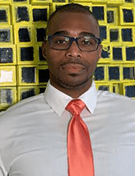
Rashawn Ray was invited on the Kojo Nnamdi Show on 88.5 WAMU for the topic, "A Conversation About Race" as a panelist to discuss in depth his work on police reform and racial inequalities. Rashawn Ray is a professor of sociology and the executive director of the Lab for Applied Social Science Research. Dr. Ray is also a fellow at the Brookings Institution and he's one of the editors of Contexts Magazine: Sociology for the Public. Below are excerpts from the discussion with Dr. Ray.
You have a four-point agenda for police reform. What are the four points?
-
There are more than four, but the main four include: the first centers on accountability. So, police officers aren't necessarily held accountable to the community. We also know that, eventually, George Floyd's family will get a large civil payout for his wrongful death, and that money is going to come from general funds. In fact, his family's tax money is going to pay them back for the dehumanization and murder of their loved one. What I'm advancing is to shift civilian payouts for police misconduct away from tax money and put it onto police department insurance, similar to what we do in health care. I think the second thing is that we need good apple protections, and we also need to ensure that bad apples cannot work in law enforcement again. What do I mean by that? The officer who killed Tamir Rice in under two seconds while Tamir Rice, a 12-year-old in Cleveland, Ohio was playing with a toy gun in a park. That officer had previously worked for another department and had been deemed mentally unfit. We then know that after he murdered Tamir Rice, he then went on to work for another department. That should simply not happen. Third, we, also, need to focus on officers themselves. The research I've done over the past decade with thousands of police officers around the United States, and even studying policing in other countries, highlights the stress that officers have every single day, the fact that they are overworked, they are underpaid, oftentimes. And so I think there are some solutions there. What we need to have happen is that officers live where they work. That's what community policing really looks like. It's not simply just about officers playing football and basketball in the street with kids. It's about experiencing the community. And, oftentimes, officers are experiencing predominately white and affluent communities, and not experiencing predominantly black or Latino communities. And then, finally, officers' mental health suffers. Eighty percent of them suffer from chronic stress. About 20 percent of them have substance abuse problems. About 20 percent also have suicidal thoughts. They need to receive mental health counseling, and that should happen about every quarter.
There is a lot of talk about defunding the police. What does that mean, how would it work and what problems would it solve?
-
What defunding the police means is if you look in cities around the country -- Minneapolis, Baltimore, Chicago and the like -- about a third of the general fund, meaning a third of the city's budget, goes to public safety, goes to policing. That's way too much. And why is it too much? It's too much because when we actually look at the clearance rate of violent crime -- homicide, robbery, rapes -- we actually see that about 40 to 60 percent of these crimes go unsolved. And so part of thinking about reallocating money, reinvesting is to actually give mental health experts and addiction specialists the abilities to do their jobs and not necessarily have law enforcement do that type of work. We also know that investing in education infrastructure makes a big dent in reducing crime. And so part of defunding and reallocating can also mean re-imagining the resources that law enforcement get as compensation. So, providing a housing subsidy does a lot as it relates to income. Part of the problem is that police officers and teachers, most of them cannot afford to live in major metropolitan areas in the United States like Washington, D.C. A fundamental problem there is that the hundreds of officers who I've interviewed about this topic, they're working 60, 80, 100, 120 hours a week trying to put foot on the table. You can't function that way and then that stressed out officer is given a gun, and, of course, we know the outcomes that can happen.
What do both political parties agree on what should be done?
-
They agree on a host of things. They agree that we need to deal with chokeholds. They agree that we need to deal with no-knock warrants. They agree that we need a database of officers who have been terminated for misconduct and, not only just terminated, but who are under investigation for misconduct and may resign, which I've seen happen a lot. That officers who are under investigation will resign and go work for another department. A national database will help with that. We also know that they both agree on having a database of officer-involved killings. Additionally, Police officers need to be above reproach. An example would be, when we are being welcomed as we are getting on a plane, and we are told, well, you know, we got a bad apple flying the plane today and we might crash this plane today. I mean, nobody would fly. And so police officers have to be above reproach in the same way. Simply saying that we have bad apples is not enough. Bad apples should not storm into Breonna Taylor's house and kill her. Bad apples should not have their knee on the back of George's Floyd's neck. We need to ensure that these things don't happen, because we pay their salaries, and we have to make sure that they are as close to perfect as possible.
Tell us about yourself, what got you interested in studying police and their role in communities? Your great uncle was the first black police chief. Is that partially what got you interested in police officers and their role in their communities?
-
You know, I would like to give all the credit to my family in that regard. I have several police officers in my family. My grandfather, who I always talk about, served in two wars, Purple Heart, and Bronze Star. My mom got admitted to West Point in the late '70s as a black woman. She got out of the military to raise me. But thinking through that, I actually got into this. About a decade ago, I was working at U.C. Berkeley as a Robert Wood Johnson health policy scholar. And I was doing work on physical activity and obesity related to the Affordable Care Act. I started noticing that black men were less likely to be physically active in predominantly white neighborhoods. That led me to realize that black men are criminalized, and oftentimes, our blackness becomes weaponized. Even when we don't have a weapon, it's perceived that we're still threatening. That highlights the statistic that black people are 3.5 times more likely than whites to be killed by policeman when not attacking or in possession of a weapon. And that particular finding led me down the road of trying to figure out really what was wrong with police community relations. Over the past decade, I've been continuing to do work on policing, because I view it as one of the fundamental barriers to true racial equality in the United States.
You recently advised Maryland lawmakers and participated in a virtual town hall organized by Prince George's County Council member Monique Anderson-Walker. What was the focus of that town hall?
-
I talked to a series of policymakers at the state level about a new police misconduct committee that they have put together. I was simply providing information that my research suggests can actually help us move forward, some of the things that we've been talking about here. They were very receptive. Of course, in the state of Maryland, Maryland has the Police Officer's Bill of Rights, which creates barriers from making real advancements on police reform. And I think that's the reason why we really have to think about shifting civilian payouts away from tax money to a police department insurances. Because when I did all the research, I found that that was the way to circumvent qualified immunity. And so I've been talking to a lot of policymakers in Maryland and Pennsylvania, and at the federal level, as well, about ways to move forward on police reform.
Nationally, black people account for 13 percent of the population, yet we've accounted for 24 percent of COVID-19 deaths. Why have more people of color been infected and have died from COVID-19 than whites?
-
You know, this is one of the biggest travesties of this global pandemic. In America, when America catches a cold, black people get the flu. Well, in 2020, when America catches COVID-19, black people die. And it has a lot to do with the structural conditions of our lives. Black people are more likely to live in densely populated areas. Black people are also more likely to be in under-resourced neighborhoods, neighborhoods that have less access to health care, meaning hospitals are farther away. They don't have specialty areas. If they have a pharmacy in their neighborhood, the pharmacy isn't well-stocked. We also know that black people are more likely to be frontline workers. They're more likely to work in grocery stores. We're more likely to work in the service industry. We're likely to be transit drivers. You put all these factors together, coupled with a recent study that I think is the big whammy, which is that black people have been six times more likely than whites to be turned away from COVID testing and treatment. You put all these factors together, and it shouldn't be a surprise with a virus that doesn't necessarily discriminate, but is coming into a society that is far from equitable.
Published on Thu, 04/24/2025 - 10:43